Pros and Cons of Quartz Countertops: An Honest Review
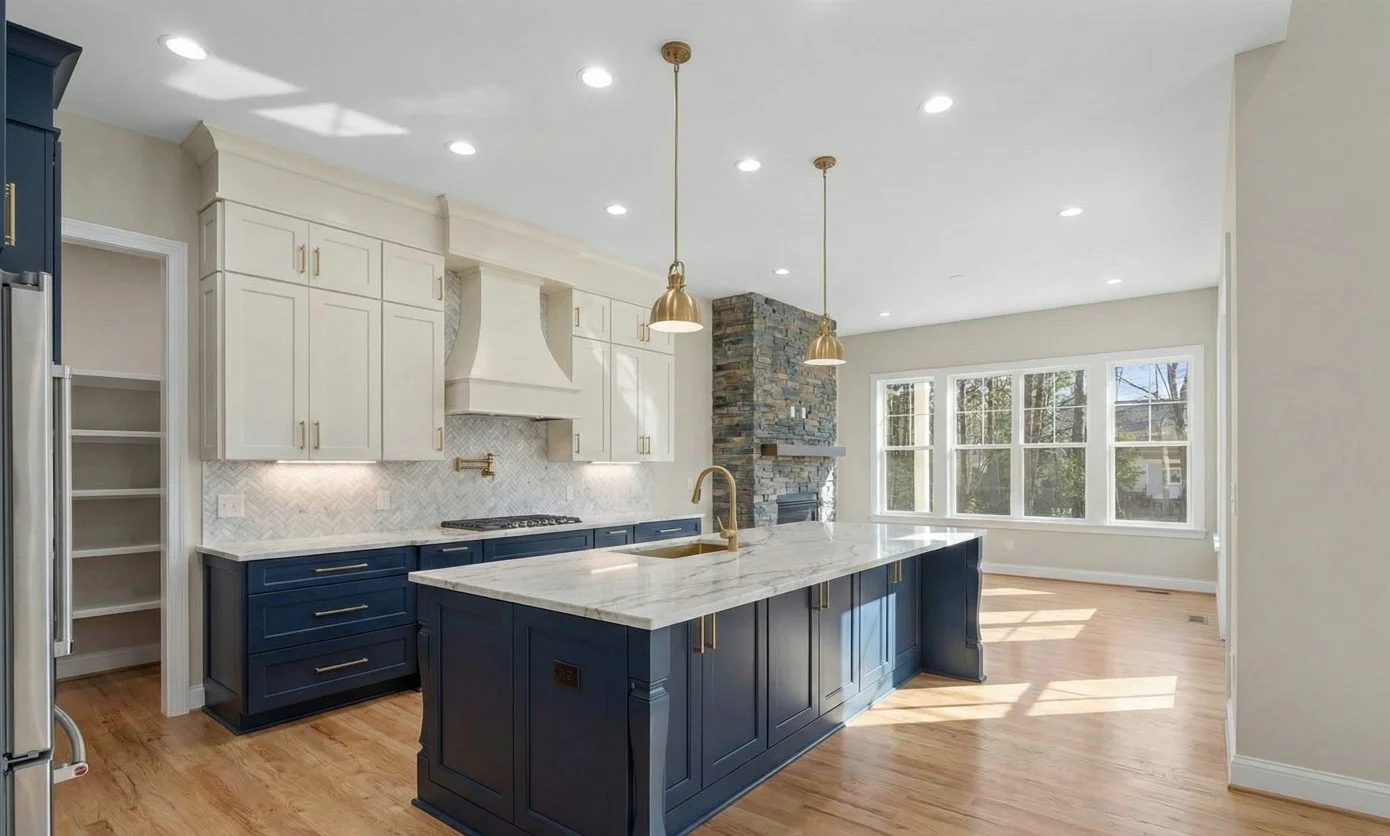

Walk into any open house in Bellevue or Mill Creek, and you are almost guaranteed to see sleek, white quartz surfaces. It has officially overtaken granite as the #1 choice for Pacific Northwest kitchens.
If you are planning a kitchen remodel in King or Snohomish County, you have likely already noticed the trend: Quartz is everywhere.
Walk into any open house in Bellevue or Mill Creek, and you are almost guaranteed to see sleek, white quartz surfaces. It has officially overtaken granite as the #1 choice for Pacific Northwest kitchens.
But if you are about to invest thousands of dollars into your countertops, you don't just want to know what is popular. You want to know if it will survive your life.
The big question is: Is quartz actually "bulletproof" like the marketing claims, or does it have weaknesses you need to know about?
The Reality Check
At 360 House Remodeling, we aren't stone salesmen; we are a design-build firm. We design the kitchen, install the counters, and then see how they hold up years later. We have seen what happens when a client spills red wine on white quartz, and we have seen what happens when someone accidentally sets a hot pot down without a trivet.
In this guide, we are cutting through the sales hype to give you the honest pros and cons of quartz countertops for 2026, so you can decide if it is the right fit for your family.
What Exactly IS Quartz?
Before we weigh the good and the bad, it is important to understand what you are actually buying.
Many homeowners confuse "Quartz" with "Quartzite."
- Quartzite is a 100% natural stone mined from the earth, similar to granite.
- Quartz (the focus of this article) is Engineered Stone.
The Recipe
Quartz countertops are a man-made product, but they aren't "fake" plastic. They are typically composed of:
- 90–93% Ground Natural Quartz: One of the hardest minerals on Earth.
- 7–10% Polymer Resins & Pigments: The "glue" that binds the stone together and adds color.
Why does this matter? Because it is engineered, the manufacturer controls the outcome. With granite, you are at the mercy of Mother Nature; your slab might have a giant black spot in the middle that you didn't expect. With quartz, the sample you fall in love with in our design studio is exactly what will arrive at your home. It brings predictability to your design.
The Pros: Why Seattle Homeowners Love Quartz
There is a reason quartz has become the standard for renovations from Shoreline to Sammamish. It solves the biggest headaches associated with natural stone.
Here are the four main reasons our clients choose quartz:
1. The "Red Wine" Rule (It is Non-Porous)
If you love red wine or start every morning with dark coffee (a Seattle staple), quartz is your best friend.
- The Benefit: Unlike granite or marble, quartz is non-porous. It does not have microscopic holes that absorb liquids.
- The Maintenance: You never have to seal it. With granite, you need to re-seal the surface every 1-2 years to prevent staining. With quartz, you simply wipe it down with soap and water, and you are done. It is virtually stain-proof.
2. It Brightens Up Grey Days
In the Pacific Northwest, we spend a lot of time indoors with overcast skies. Dark, busy granite can make a kitchen feel cave-like.
- The Trend: Homeowners are moving toward clean, bright whites to maximize light reflection.
- The Advantage: Nature rarely makes pure white stone (marble is soft and stains easily). Quartz gives you that brilliant, snowy white look—or the elegant "Calacatta Gold" marble look—without the fragility of real stone. It keeps your kitchen feeling airy even in the middle of December.
3. Design Consistency (No Surprises)
Have you ever picked a granite sample, only to have the full slab arrive with a giant, ugly black blotch right where your sink was supposed to go?
- The Advantage: Because quartz is engineered, it is consistent. The color, veining, and pattern you see in our design meeting is exactly what you get on your island. There are no "defects" to work around.
4. It Is Ultra-Durable (Family Proof)
Quartz is one of the hardest minerals on earth (a 7 on the Mohs Hardness Scale).
- The Benefit: It is incredibly difficult to scratch or chip. If your kids drag their backpacks across the island or use the counter as a science project table, quartz can take the abuse much better than softer stones like marble or limestone.
The Cons: The Stuff Manufacturers Don't Tell You
We love quartz, but it is not magic. It has specific weaknesses that you need to be aware of before you sign a contract.
Here is the unvarnished truth we share with every client during our design phase:
1. The "Trivet Rule" (Heat Sensitivity)
This is the single biggest "con" of quartz.
- The Science: Remember that 7-10% resin "glue" we talked about? Resin is plastic, and plastic melts.
- The Reality: You cannot take a hot cast-iron skillet off the stove or a baking sheet out of the oven and set it directly on quartz. Extreme heat (typically over 300°F) can scorch the resin, leaving a permanent white burn mark or even cracking the slab.
- The Fix: You must use trivets or hot pads. If you are a chef who loves tossing hot pans onto the counter without thinking, Granite is a better choice for you.
2. No Outdoor Kitchens (UV Sensitivity)
If you are planning a covered outdoor BBQ area for those Seattle summers, quartz is not the answer.
- The Problem: Direct sunlight (UV rays) reacts with the pigments in the resin. Over time, a quartz countertop exposed to the sun will fade and yellow.
- The Fix: Keep quartz indoors. For outdoor spaces, we recommend natural Granite, Porcelain, or Concrete.
3. Price Point (It’s Not the "Budget" Option)
Years ago, quartz was the cheaper alternative to stone. That is no longer true in 2026.
- The Reality: High-quality engineered quartz (like the designs that mimic Calacatta marble) often costs more than standard granite. You are paying for the technology and the durability.
- The Comparison: While cheaper than high-end exotic marble, quartz is generally comparable in price to mid-range and high-end granite.
4. Visible Seams
Quartz is manufactured in slabs of specific sizes (usually around 120 x 55 inches).
- The Issue: If you have a massive kitchen island that exceeds these dimensions, you will have a seam. Because quartz is colored with resin, the seams can sometimes be slightly more visible than they are in the busy, organic patterns of granite.
- The Fix: This comes down to the skill of your fabricator. At 360 House Remodeling, we carefully plan seam placement to be as inconspicuous as possible, but it is rarely "invisible."
Comparison Table: Quartz vs. Granite vs. Marble
Still on the fence? Here is how Quartz stacks up against the other two heavyweights of the countertop world in 2026.
Best Quartz Brands We Recommend
A common misconception is that "Quartz is Quartz." This is false.
While the chemical recipe is similar, the quality control varies wildly. Cheap, "no-name" quartz imported from overseas often contains less quartz mineral and more resin, making it prone to warping, pooling, and discoloration.
At 360 House Remodeling, we only work with manufacturers that stand behind their products with solid warranties. Here are the brands we trust and install most often in King and Snohomish County:
1. PentalQuartz (The Local Favorite)
If you live in Seattle or Bellevue, you have likely heard of Pental.
- Why We Love It: They are a Seattle-based company. They understand the Pacific Northwest aesthetic perfectly, offering beautiful, soft grey and white veining that fits our home styles.
- The Perk: Because they are local, you can actually visit their showroom in Seattle to see full slabs in person before you buy—something we highly recommend!
2. Cambria (The Luxury Choice)
- Why We Love It: Cambria is family-owned and American-made. They offer some of the most stunning, dramatic designs on the market. If you want a "statement island" with bold gold or black veining, Cambria is the leader.
3. Silestone & Caesarstone (The Industry Titans)
- Why We Love It: These are the pioneers of the industry. Silestone (by Cosentino) is famous for its "N-Boost" technology, which makes the surface even more liquid-repellent and color-saturated. They are incredibly reliable workhorses for busy kitchens.
Conclusion: Is Quartz Right for Your Kitchen?
There is no "perfect" countertop, but for 90% of the families we work with in the Pacific Northwest, Quartz is the best balance of beauty and brains.
- Choose Quartz If: You want a bright, modern look, hate maintenance, and want a surface that can survive red wine spills and kids' art projects.
- Choose Granite If: You want a truly unique, one-of-a-kind natural pattern and you need a surface that can handle hot pans directly from the oven.
FAQ
Frequently Asked Questions
Does quartz chip?
Is quartz cheaper than granite in 2026?
Can you fix a scratch or chip in quartz?
Is quartz safe for food preparation?
Have questions about your upcoming remodeling project? We’ve got answers to help you plan your renovation with confidence.
At 360 House Remodeling, we believe you should see these materials in your own home, under your own lighting—not just in a fluorescent-lit warehouse.
blog
Read more tips
Get fresh ideas for your next home project.Read our latest articles for quick tips on kitchen design, bathroom remodeling, and whole-home renovations that add comfort and value.

Ready to Bring Your Home Remodel to Life?
Have a vision for your home or just exploring ideas?Our team is here to guide you every step of the way.Reach out to 360 House Remodeling for a free, no-pressure consultation and start planning your next project today.