Euro Style Cabinets vs Face Frame: Which Is Right for Your Kitchen?
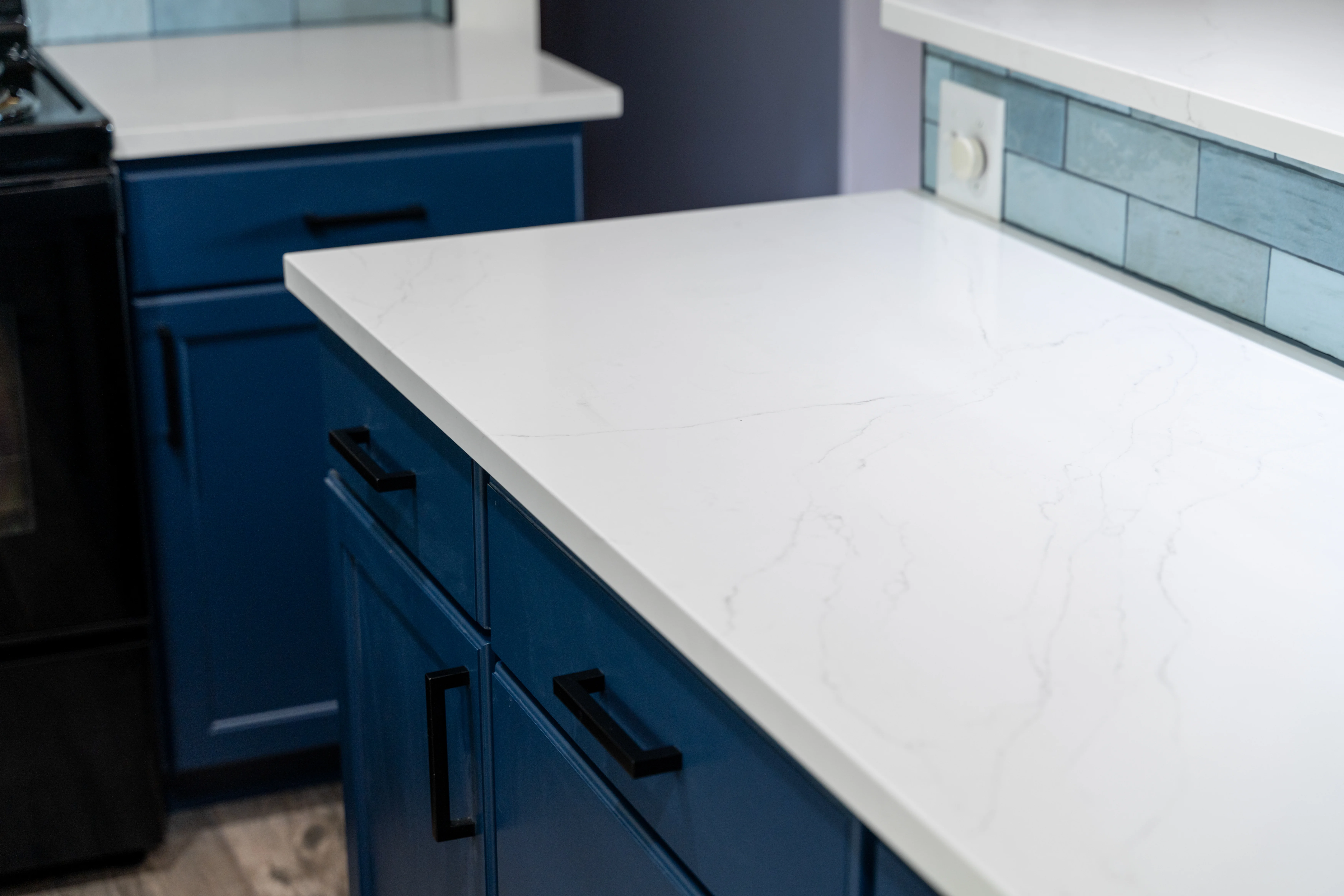

Choosing between euro style cabinets vs face frame construction is one of the earliest decisions in any full kitchen remodel. Both are high-quality options, but they perform differently depending on your home’s architecture, your design goals, and how your kitchen is actually used. A planning-first approach, one that includes 3D renderings before anything is ordered, is what turns that decision into a clear one.
Euro style cabinets attach doors directly to the cabinet box for a clean, modern look with more interior space, while face-frame cabinets use a solid wood border for a traditional aesthetic and more forgiving installation. Both are widely used in high-end kitchen remodels, and the right choice depends on your home, your design vision, and the quality of the team installing them.
At 360 House Remodeling, our family-led team walks every homeowner through this comparison as part of the full design phase. We plan cabinets alongside countertops, layout, and lighting from the start, the same way we approach every material choice, including which countertops pair best with white cabinets. Getting the cabinet style right the first time is one of the biggest factors in whether your kitchen looks intentional or pieced together, which is also why choosing the right contractor matters as much as choosing the right cabinets.
Key Takeaways
- Face frame cabinets have a 1.5-inch solid wood border and suit traditional or transitional kitchens.
- Euro-style (frameless) cabinets attach doors directly to the box for a modern look and up to 15% more usable interior width.
- Face frame construction is more forgiving during installation, especially in older homes with out-of-plumb walls.
- Frameless cabinets require precise installation because gaps between doors are immediately visible.
- The right choice depends on your home’s style, your design priorities, and the skill of your installer.
What Are Face Frame Cabinets?
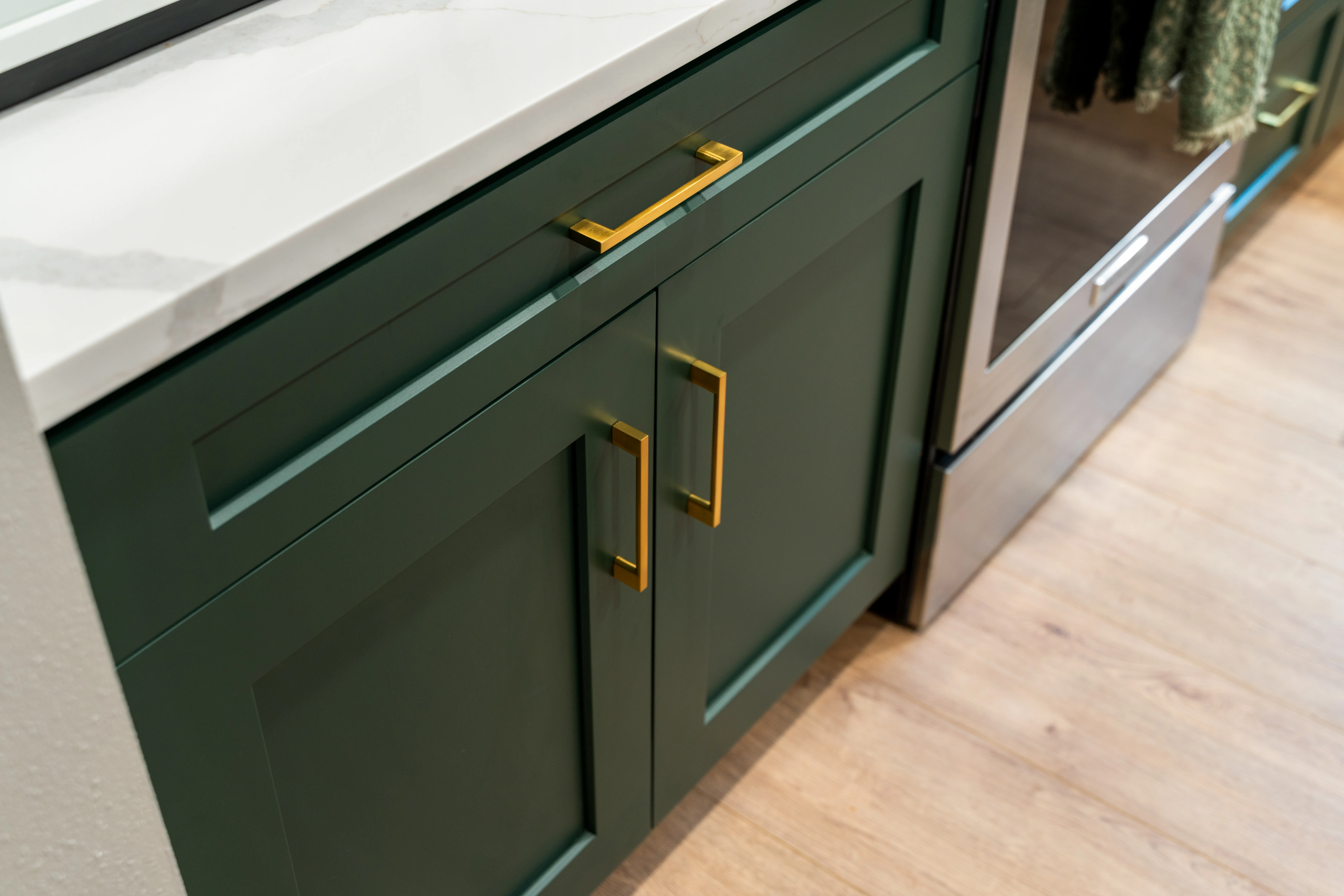
Face frame cabinets are built with a solid wood frame, typically 1.5 inches wide, attached directly to the front of the cabinet box. That frame creates the visible border around the doors and drawers, and it is where the hinges and hardware mount. This construction method has been the standard in American kitchens for decades and remains widely used across traditional, transitional, and craftsman-style homes.
Face framed cabinets give you flexibility in door overlay options: inset, partial overlay, or full overlay, depending on the look you want. The frame adds rigidity to the cabinet structure and provides a forgiving surface during installation. If you have grown up with American kitchens, you have almost certainly grown up with face frame construction.
What Is Euro-Style (Frameless) Cabinets
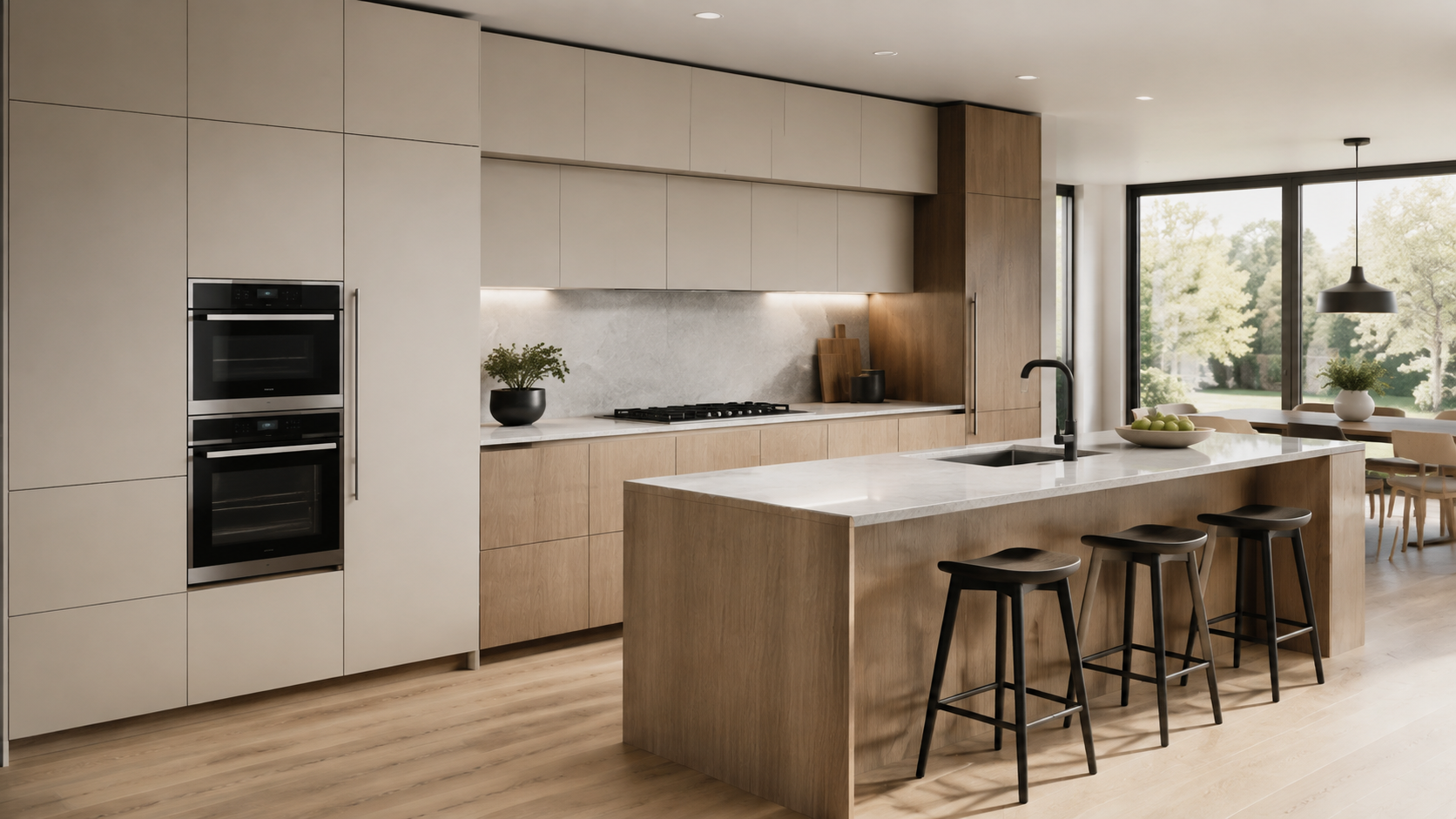
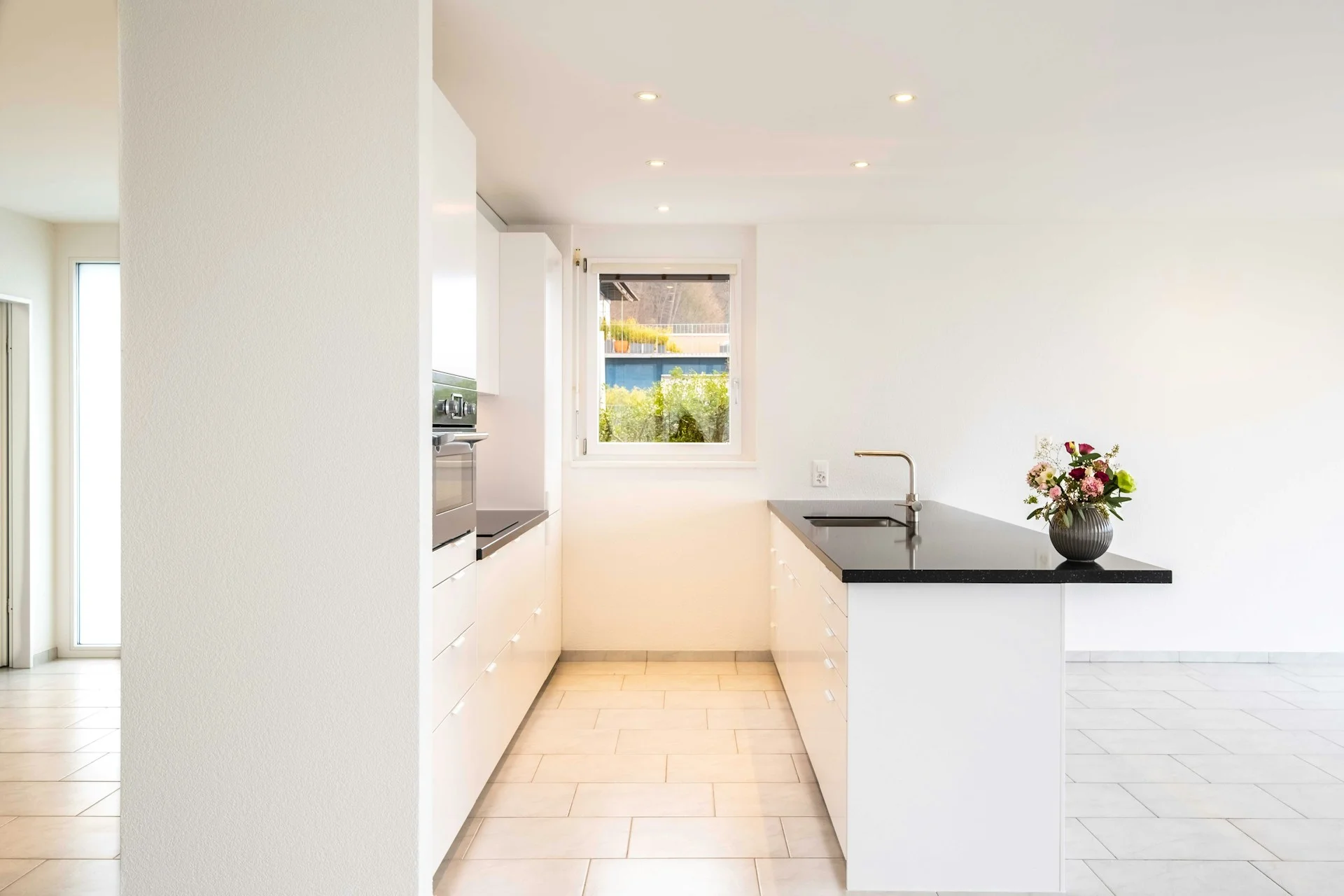
Euro-style (frameless) cabinets eliminate the face frame entirely. The door attaches directly to the cabinet box using concealed European hinges, and the box panels, not a separate frame, carry the structural load. The result is a full-overlay door that covers nearly the entire cabinet front, leaving minimal gaps between doors and creating the clean, uninterrupted sightlines that define modern and contemporary kitchens.
This design originated in Europe and has gained steady popularity across American homes over the past several decades. The appeal goes beyond looks. The concealed hinge system allows for precise three-way adjustment after installation, and the absence of a face frame means more usable interior width per cabinet. Frameless cabinets are increasingly specified for homeowners planning full kitchen remodels with open-concept layouts.
Euro Style Cabinets vs Face Frame: A Side-by-Side Comparison
The core differences in the euro style cabinets vs face frame comparison come down to structure, storage, aesthetics, and cost. Here is how they line up across the criteria that actually matter:
The practical takeaway: if storage efficiency and a modern aesthetic are your priorities, frameless euro-style cabinets have a measurable advantage. If you are working within a traditional home or want the flexibility of inset doors, face frame construction gives you more design range. Neither style is universally better. The right choice depends on your specific project goals and the space you are working with.
Which Cabinet Style Is Right for Your Home?
The best answer to the face framed vs euro-style question depends on your home, your design vision, and how your kitchen will actually be used. One homeowner who recently worked with our team arrived undecided for their open-concept renovation in Bellevue. After going through our 3D design process, they could see both options rendered in their actual space and chose euro-style frameless cabinets once the clean lines and layout alignment were visible side by side.
Here is a practical decision framework:
- Choose face frame if: your home has traditional or transitional architecture, you want inset doors for a furniture-style look, you are working within a tighter project scope, or you prefer the classic American kitchen aesthetic.
- Choose euro-style (frameless) if: your design goals are modern or contemporary, you want to maximize interior cabinet space, you prefer clean uninterrupted sightlines, or you are planning a full kitchen remodel with an updated layout.
In the Pacific Northwest, homeowners with open-plan living spaces, including many of the projects we complete in Kirkland and Mercer Island, are increasingly specifying frameless euro-style cabinets where visual continuity between the kitchen and living area matters.
According to the National Kitchen & Bath Association, cabinetry choice is one of the most influential design decisions in a full kitchen remodel because it shapes both function and sightlines throughout the space.
The Factor Most Comparisons Skip: Installation and Long-Term Maintenance
Most face framed cabinets vs frameless cabinets comparisons stop at aesthetics and storage. Two factors that rarely come up are installation complexity and long-term maintenance, and both should influence your decision.
Installation complexity
Face frame cabinets are more forgiving in homes with out-of-plumb or out-of-level walls, which are common in older Pacific Northwest homes. The frame helps absorb minor imperfections in the wall surface.
Euro-style frameless cabinets require more precise installation because gaps between doors are immediately visible if the boxes are not perfectly aligned. The face frame cabinets vs modern euro-style question is not just a design preference. It is also a question of whether your installer has the skill and preparation process to execute frameless work cleanly.
Long-term maintenance
Concealed European hinges offer three-way adjustment covering height, depth, and lateral movement, which makes fine-tuning doors over time straightforward. Face frame hinges are visible and easy to access, but the exposed wood frame can show wear at contact points over years of use. Frameless doors, being full overlay, experience less edge contact wear overall.
The bottom line: the better long-term choice depends as much on the quality of installation as on the cabinet style itself. Choosing an experienced, licensed contractor with a planning-first approach is what protects that investment over time.
Plan Your Cabinet Choice as Part of a Full Kitchen Remodel
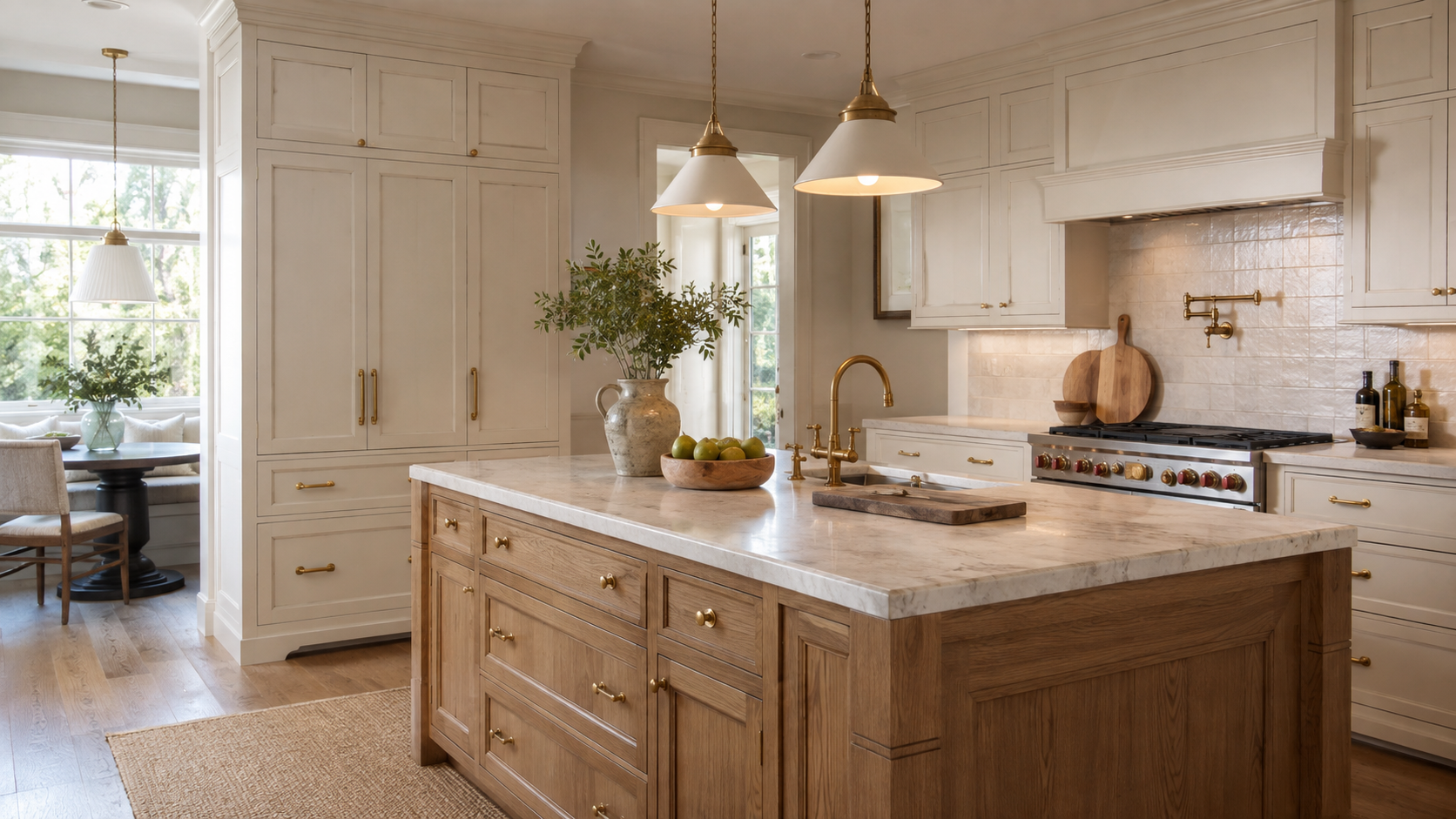
Cabinets are one part of a full kitchen remodel, not a standalone job. Layout, plumbing, electrical, countertops, backsplash, appliances, and lighting all interact with the cabinet style you choose.
At 360 House Remodeling, we plan every element together during the design phase so nothing has to be changed mid-build. Our family-led team handles design, permits, materials, and construction as one integrated process, from first consultation through final walkthrough.
We serve homeowners across Bellevue, Kirkland, Mercer Island, Mukilteo, Edmonds, Everett, Mill Creek, Lynnwood, Shoreline, and Snohomish. As a family-owned, licensed, and insured company (License #360HOHR762BR), our approach is planning-first: nothing gets built until the design, budget, and scope are locked in.
The euro-style cabinets vs face frame decision gets significantly easier when you can see both options rendered in your actual space before anything is ordered. What looks like a close call on paper often becomes obvious once the proportions, sightlines, and door styles are visible in context. Schedule your free consultation to walk through the euro style cabinets vs face frame comparison with our team, backed by 3D renderings of your actual kitchen.
The right cabinet style is not just about looks. It shapes how your kitchen functions, how it wears over time, and how it fits with the rest of your home. When cabinets are planned alongside the full remodel from day one, the result is a kitchen that feels intentional from every angle.
blog
Read more tips
Get fresh ideas for your next home project.Read our latest articles for quick tips on kitchen design, bathroom remodeling, and whole-home renovations that add comfort and value.

Ready to Bring Your Home Remodel to Life?
Have a vision for your home or just exploring ideas?Our team is here to guide you every step of the way.Reach out to 360 House Remodeling for a free, no-pressure consultation and start planning your next project today.